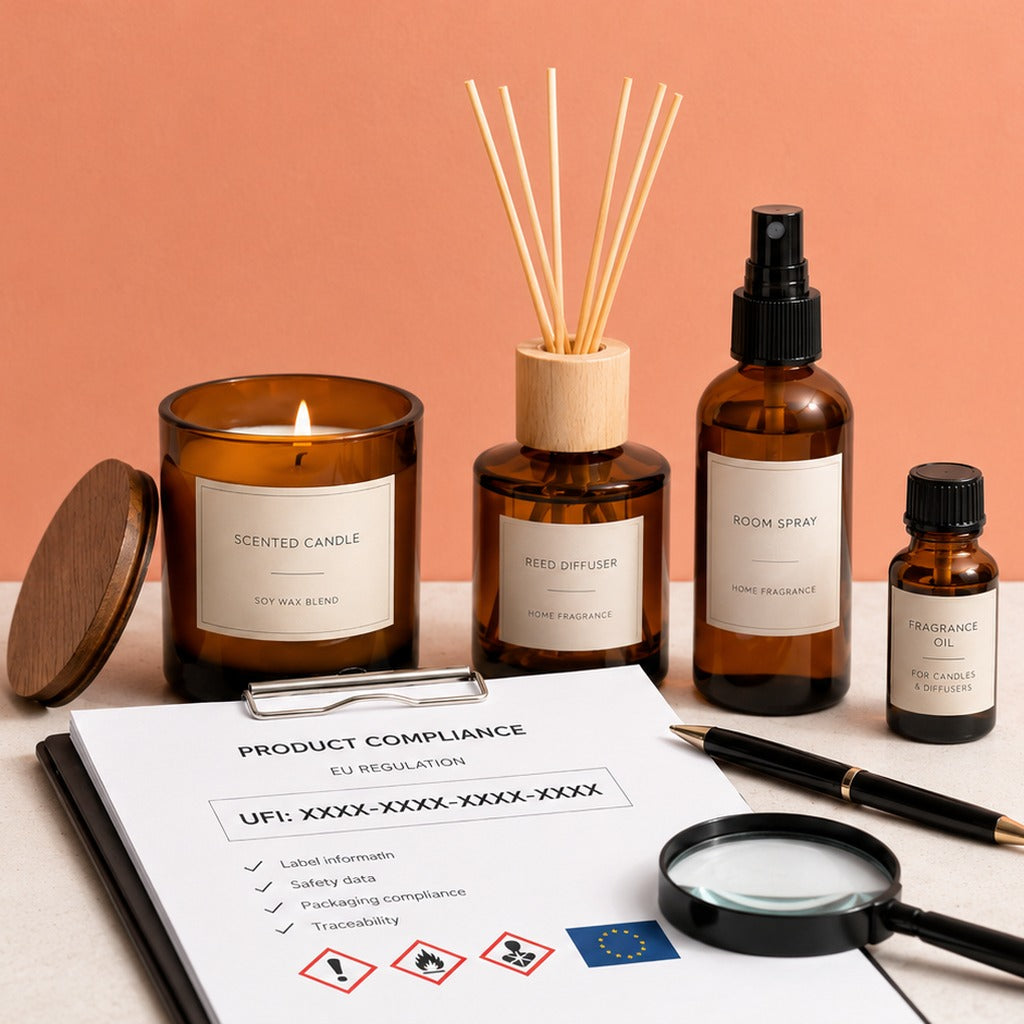
This article is for beginner candle makers who want to understand why interior candles are needed, what formats to produce, how they should look, how to price them, and who actually buys them.
1. Why candles matter in interior design
For a professional interior designer, a candle is not “just a smell”. A good interior candle adds three things at once:
-
- Light – a soft, warm, moving light instead of a cold overhead lamp.
- Form – a decorative object that completes a coffee table, shelf or mantelpiece.
- Scent – a mood for the space: calm, focus, “home feeling”.
Candles are one of the easiest ways to:
-
- create a cosy evening atmosphere,
- highlight key areas in a room,
- make a space emotionally memorable.
2. Where and how candles are actually used
From real interior projects:
Living room
-
- Clusters of container and pillar candles on a coffee table, console or fireplace.
- Combined with books, trays, vases and small objects.
Dining room/kitchen
-
- Taper candles on the table for everyday and festive settings.
- Subtle scented candles that don’t fight with the smell of food.
Bedroom
-
- One or two softly scented candles on a bedside table or dresser.
- Calm, dim light for winding down.
Bathroom
-
- “Home spa”: candles around the bath, on shelves and ledges.
Home office or study
-
- One neat candle on a desk or shelf to define a “small island” of comfort and focus.
Understanding these real use cases is crucial: you’re not making “abstract products”, you’re creating tools for these situations.
3. Who actually buys interior candles
When you think in “interior” terms, your audience becomes wider and more professional.
3.1. Private customers (B2C)
They buy:
-
- through your website, marketplaces, Instagram, at markets and fairs,
- for themselves and as gifts.
What they need from you:
-
- clear photos “in the interior”,
- simple language: “for living room”, “for bedroom”, “for bathroom”,
- a price that feels like a good alternative to well-known brands (not a suspiciously cheap product, but not unreachable luxury).
3.2. Interior designers
For designers the candle is a tool, not just a nice object. What they care about:
-
- stable quality,
- predictable scents (client shouldn’t complain),
- neutral, flexible colour palette,
- good wholesale conditions (often around 50% of retail with a reasonable minimum order).
A practical step:
Create a PDF catalogue for designers with:
-
- interior photos,
- sizes, colours, scents,
- wholesale prices and minimum order quantities.
3.3. Decor shops and concept stores
They want:
-
- a clear, compact range for their shelves (for example: 3–4 scents, 2 sizes of container candles, a few pillar/taper options),
- packaging that sells visually,
- enough margin between your wholesale and their retail.
3.4. HoReCa, events, gifting
Restaurants/hotels usually buy:
-
- taper and pillar candles for tables and public areas,
- subtle scents that don’t overpower food or existing ambient smell.
Corporate gifting, developers, event agencies love:
-
- sets of 2–3 candles,
- custom packaging, logo labels, branded cards.
This segment values reliability and flexibility more than romantic stories.
4. What formats of interior candles are worth producing
4.1. Container candles – your core product
Designers and shops love container candles because they are:
-
- safer (wax is inside a vessel),
- visually neat (even when the candle is not burning),
- easy to place in almost any style of interior.
Practical recommendations:
Volumes:
-
- 90–120 ml – small size: testers, bathrooms, bedside tables.
- 180–230 ml – main “working” candle for living rooms and bedrooms.
- 300+ ml – larger interior piece, can be a central object in a composition.
Materials:
-
- matte or satin glass,
- solid ceramics,
- concrete/stone for more brutal or minimal interiors.
Shapes:
-
- simple cylinder or tumbler,
- low, wide bowls (usually with 3–4 wicks).
4.2. Pillar and sculptural candles – interior “objects”
Pillar and sculptural candles are used:
-
- on fireplaces,
- on console tables,
- in seasonal and festive arrangements (Christmas, autumn, weddings).
What makes sense to produce:
-
- 2–3 diameters and 2–3 heights that combine well in groups.
- Colour palette: neutral base (ivory, warm white, greige, grey, black) + a few seasonal accent colours.
- Sculptural candles: focus more on shape and surface; scent should be light or none at all – they must look good even unlit.
4.3. Taper / dinner candles
Taper candles are classics for:
-
- table settings,
- restaurants,
- weddings and events.
Parameters:
-
- length around 25–30 cm,
- sold in sets (2, 4 or 6 pieces),
- usually unscented or with a very delicate scent – they shouldn’t interfere with food aromas.
4.4. Scented vs purely decorative lines
It often makes sense to have two parallel lines:
-
- Interior scented candles – for light + fragrance (mostly containers).
- Purely decorative candles – for form and colour (pillar, sculptural, taper), often unscented.
This allows you to serve both needs: atmosphere and visual styling.
5. What scents should an interior candle brand have
Think of scent like another layer of design. Different rooms need different functions. Minimal “starter” fragrance map for a home:
-
- Living room – welcoming and warm: woods, resins, soft spices, a touch of gourmand (vanilla, tonka, tobacco accord).
- Bedroom – relaxation: lavender, iris, soft florals, woods, musks.
- Kitchen/dining area – compatible with food: citrus, green notes, herbs, light florals; clean and transparent compositions.
- Bathroom/spa area: eucalyptus, mint, marine notes, clean “spa” accords.
- Home office/library: woods, leather, smoky, inky or “library” notes.
For a beginner, 4–6 well-structured scents are much better than a random catalogue of 30 oils. You’re building a system, not a chaos of smells.
6. How interior candles should look
Interior-focused brands bet on shape, texture and palette, not on loud decoration.
Vessels:
-
- simple, clean forms,
- matte / satin finishes,
- tactile materials: ceramics, concrete, thick glass.
Colour philosophy:
-
- base: white, ivory, greige, grey, black;
- 1–2 accent colour lines per season (for example: olive, terracotta, deep blue).
Labels:
-
- readable typography,
- neat logo placement,
- minimum visual noise – the candle must not look cheap or “too busy” in a refined interior.
Your goal: a candle that a designer will gladly put into a finished project, not hide in a cupboard.
7. Pricing: simple, honest framework in euros
7.1. Start with full cost per unit (COGS)
For each candle format, calculate full cost per unit:
-
- wax, fragrance, wick, vessel, lid, labels, box,
- your labour (how many candles you realistically produce per hour and how much your hour is worth),
- a fair share of overheads (rent, equipment, tests, marketing, website, taxes).
This gives you COGS per candle (for example, 5 €).
7.2. Target margin
A sustainable candle business usually aims for:
-
- gross margin around 50–65%.
A simple working rule many makers use:
-
- wholesale ≈ 2 × COGS,
- retail ≈ 3–4 × COGS.
Example:
If COGS of a 200 ml interior candle is about 5 €:
-
- wholesale price – around 10 €,
- retail price – around 18–22 € (depending on positioning and market).
This range is typical for the “good middle/accessible premium” segment.
For stronger branding, more expensive vessels and packaging, the same 200 ml size can easily be sold for 22–28 € or more. Larger multi-wick candles in heavy glass or ceramics can be in the 60–120+ € bracket – this is normal for the premium interior segment.
7.3. Adjusting prices by format and channel
Container candles 180–230 ml
-
- COGS often around 4–6 €,
- wholesale – roughly 9–12 €,
- retail – roughly 18–28 €.
Pillar / sculptural candles
-
- less packaging but more wax and manual work;
- price is more driven by design and uniqueness – they are closer to small art objects.
Taper candles
-
- sold in sets,
- per-piece cost is lower,
- colour and quality of burning (no drips, stable flame) matter more than complex packaging.
Channels:
-
- your own online shop/marketplaces – retail pricing (3–4 × COGS),
- interior shops and concept stores – wholesale (they usually expect about x2 from your wholesale to their shelf price).
8. Practical scenarios (simple “case studies”)
Case 1. Small brand for private clients
Range: 4 scents in 200 ml containers (COGS around 5 €).
Pricing: retail 19–21 €.
Positioning: “interior soy candles”, modern, cosy, not super-luxury but clearly not mass supermarket level.
Channels: online shop, Instagram, local markets.
Result: margin is sufficient to cover materials, testing and basic marketing.
Case 2. Line for an interior showroom
Range: neutral collection in matte glass 30 cl, 3–4 calm scents, wooden lid, box.
COGS per candle: around 6–7 €.
Wholesale price for the showroom: 13–15 €.
Recommended retail price: 28–32 €.
Plus: one exclusive colour that matches the showroom palette (can be priced slightly higher).
Case 3. Premium “object” collection
Range: large 3-wick candles 400–600 ml in heavy ceramics or thick glass, limited palette, complex scents.
COGS: easily 12–20+ € per candle (expensive vessel, a lot of wax, manual work).
Retail price: 60–120+ €, positioned as a decorative object, not just a candle.
Such pieces are closer to designer home decor than to “just home fragrance”.
9. Key takeaways for a beginner candle maker
Interior candles are tools of design: light + form + scent, not just something that “smells nice”.
Focus on the formats that designers actually use:
- container candles (small, medium, large),
- a few pillar sizes,
- taper candles in sets.
Build a structured scent line for different zones of the home instead of a random list of oils.
Make your candles look calm, tactile and interior-friendly – they must feel natural in a finished project.
Set prices from real COGS and clear positioning, aiming at 50–65% gross margin, instead of “what feels ok today”.
Remember that your clients are not only private buyers, but also designers, shops, HoReCa and gifting services – each of them has their own needs.